

About the Course
Electricity markets are not an end in themselves; they are institutional and regulatory arrangements designed to improve the efficiency of power system operation, mobilise investment, allocate risks transparently, and provide credible price signals across the electricity value chain. Yet designing effective electricity markets requires far more than introducing competition. It demands strong institutions, robust regulatory frameworks, sound system operation, and market arrangements that reflect the realities of each country’s power sector.
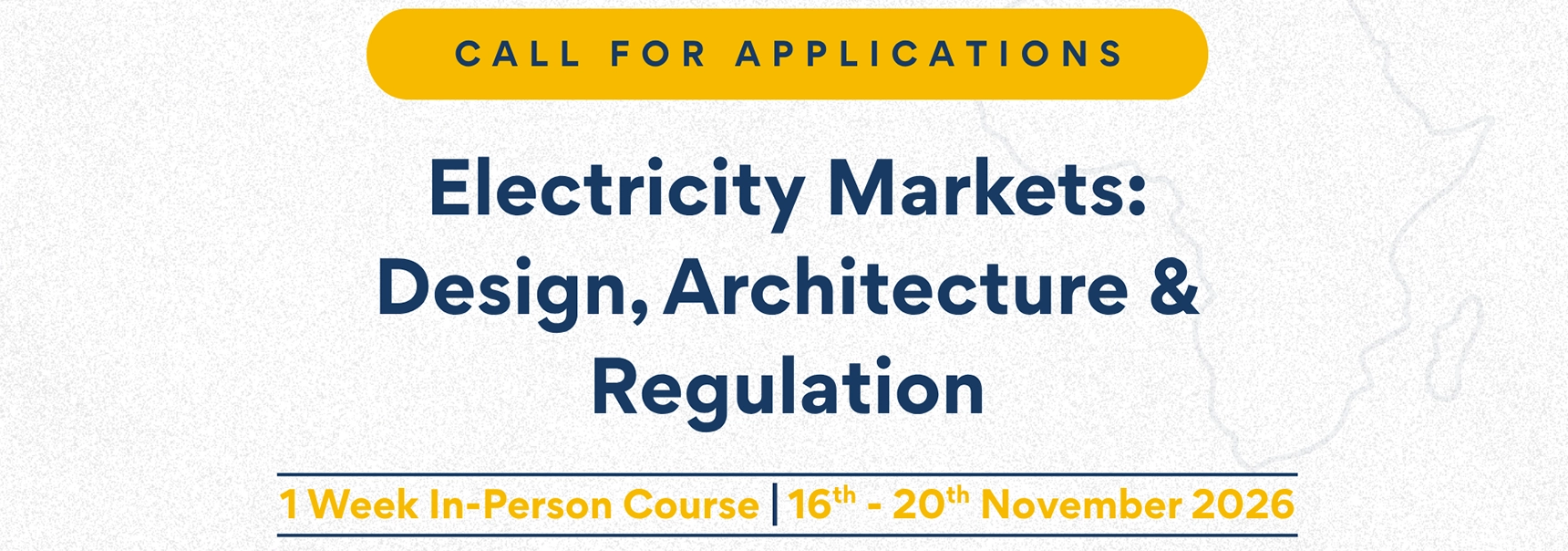
The Wholesale Electricity Markets in African Countries: From National, Regional and Continental Perspectives programme is an intensive executive course developed by the African School of Regulation (ASR) to equip regulators, utility professionals, policymakers, system operators, and researchers with the practical knowledge required to design, operate, regulate, and reform electricity markets across Africa.
Drawing on international best practice while remaining firmly grounded in African realities, the programme explores electricity market fundamentals, market architecture, trading arrangements, transmission regulation, regional power pools, private sector participation, and the transition towards the African Single Electricity Market (AfSEM). Participants will also engage in a live electricity market simulation and a structured site visit to the West African Power Pool (WAPP) Information and Coordination Centre in Cotonou.
Programme Highlight
Participate in the Stanford University live electricity market simulation, where you will take on the roles of regulators, utilities, and market participants to experience electricity market dynamics in real time.
Course Structure
Module 1 – Foundations of Electricity Markets
Explore the history of electricity market reform, market liberalisation, power sector restructuring, and the regulatory foundations of electricity markets.
Module 2 – Power Sector Reform in African Countries
Examine electricity sector reform models, utility performance, the single buyer model, wholesale market prerequisites, and African experiences with market liberalisation.
Module 3 – Business Models of Wholesale Markets and Centralised Decision-Making
Understand wholesale market design, energy pricing, capacity remuneration mechanisms, ancillary services, and generation adequacy.
Module 4 – Trading Arrangements and Provision of Necessary Electricity Services
Analyse electricity contracts, procurement approaches, settlement systems, market power mitigation, balancing arrangements, and system operation.
Module 5 – Transmission: Investment, Access and Cost Allocation
Explore transmission planning, congestion management, transmission pricing, cost allocation, network access, and transmission rights.
Module 6 – Market Rules Design and Governance
Understand electricity market governance, market rules, supervision, settlement risks, customer eligibility, and market implementation.
Module 7 – Cross-Border Electricity Trade and Regional Power Markets
Study African power pools, regional market design, governance, transmission coordination, payment security, and the development of the African Single Electricity Market.
Module 8 – Private Sector Participation in Transmission
Assess investment models, financing structures, risk allocation, regulatory approaches, and Independent Transmission Projects (ITPs).
Module 9 – Regulatory Reforms and Market Liberalisation in Africa
Evaluate recent electricity market reforms across African countries and examine different approaches to introducing competition and bilateral electricity trading.
Course Highlights
This executive programme combines academic excellence with practical, hands-on learning to help participants understand the complexities of electricity market design and operation.
Live Electricity Market Simulation
Experience electricity markets in action through a live market simulation developed in collaboration with Stanford University. Participants will assume the roles of market operators, regulators, utilities, and electricity traders, making real-time decisions and experiencing the commercial, operational, and regulatory dynamics of wholesale electricity markets in a realistic environment.
Site Visit to the West African Power Pool (WAPP)
Gain first-hand insights into regional electricity market operations through a structured visit to the West African Power Pool (WAPP) Information and Coordination Centre in Cotonou. Participants will engage directly with experts managing regional electricity trade and market coordination.
Practical African Case Studies
Learn from real regulatory reforms, electricity market developments, and regional integration initiatives across Africa through expert-led discussions and practical case studies.
Peer Learning
Exchange experiences with regulators, utilities, policymakers, and energy professionals from across Africa, building a valuable professional network that extends beyond the programme.
Course Faculty
The programme is delivered by internationally recognised experts in electricity market design, regulation, power sector reform, and regional electricity integration.
Course Director:
Prof. Ignacio Pérez-Arriaga: Professor Emeritus, Massachusetts Institute of Technology (MIT); Founder and Academic Director, African School of Regulation.
Course Lead
Crispin Berteyeb: Research Analyst, African School of Regulation.
Additional faculty members from leading regulatory institutions, regional power pools, universities, and industry will be announced soon.
Target Audience
This programme is designed for:
- Professionals supporting electricity market reform and regional integration
- Commissioners and senior staff of electricity regulatory authorities
- Electricity market regulators and market monitoring specialists
- Utility executives and technical managers
- Transmission and system operators
- Energy ministry officials
- Regional power pool institutions
- Development finance institutions
- Energy consultants
- Researchers and academics
Fees & Cancellation Policy
Standard Fee: USD $1,850
ASR Alumni Discount: USD $1,500
All payments must be completed by 3rd November 2026.
Cancellation: The paid registration fee is non-refundable. However, registrant substitution may be made up to 20 days before the course’s start date.
Course Resources