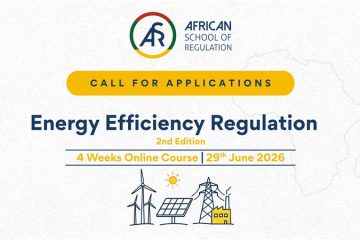
Registration Open
4 – Week Online Course
Access to clean cooking remains one of the most urgent yet under-addressed development challenges globally, particularly in Sub-Saharan Africa. Despite commitments under SDG 7 to achieve universal access by 2030, progress has been slow and uneven.
Today, a significant share of the population continues to rely on polluting fuels such as firewood, charcoal, and kerosene, with serious implications for health, gender equality, and the environment. In 2022 alone, nearly 80% of people in Sub-Saharan Africa lacked access to clean cooking solutions.
At the same time, growing populations and limited investment have widened the access gap. Addressing this challenge requires more than technology; it demands integrated approaches across policy, regulation, financing, and planning.
This course brings together leading institutions to explore practical, scalable solutions that can accelerate clean cooking adoption across Africa and similar contexts globally.
What You Will Learn
By the end of the course, participants will be able to:
- Understand existing regulatory and financial models for clean cooking in Africa.
- Evaluate the application of geospatial planning tools to design cost-effective national strategies.
- Analyse real-world case studies from across the continent.
- Develop reform proposals grounded in evidence and impact.

The course uses a flexible e-learning platform that features a combination of resources—podcasts and readings, live lectures, and discussions with the course instructors and guest experts. The training is structured into weekly lessons, each focusing on a specific topic area. Each week the core learning content is delivered through a live lecture (1 hour), followed by a panel discussion with guest experts (45 minutes) and a Q&A session (30 minutes), supplemented by carefully selected readings. One optional office hour per week will be available for extra support. Additional reading material is provided for those who wish to explore topics further. Participants are required to engage with one another and with the course instructors through forum discussions in the course platform. A weekly self-assessment quiz is provided to allow participants to test their level of understanding of the week’s learning material. A short capstone prroject will complete the understanding of how the material learned during the week applies in a specific context.
This course is designed for professionals across the energy sector, including regulatory authorities, government ministries and agencies, utilities, private sector companies, academia, investors, consultants and development organizations. It can be also useful for anyone seeking to understand the challenges hindering clean cooking programs—why progress remains slow, why private investment falls drastically short of what is needed, and what alternative approaches can drive meaningful change.
Participants will gain the knowledge, tools, and resources needed to effectively plan, design, regulate, and finance electrification at a regional or national level, with a focus on practical solutions that deliver real impact.
Fees:
- Course fee: $200 USD
- Students fee: $100 USD
Discounts:
- Early bird: 10% reduction for participants who complete registration by April 21st, 2026.
- Group Offer: 10% reduction for organisations registering five or more participants together in a single coordinated submission by May 5th, 2026.
- Alumnus: 10% reduction for alumni of ASR courses; valid until May 5th, 2026.
All payments must be completed by May 5th, 2026.
Cancellation:
The paid registration fee is non-refundable. However, registrant substitution may be made up to 20 days before the course’s start date.
Students’ enrolment:
*Please send your certificate of current studies with the stamp of your university to ASR Course Support: support@africanschoolregulation.org.
Your studies’ start and end dates should also be clearly mentioned in the document. Please make sure that your period of studies fully covers the duration of the training course.