
Eleven specialised programmes will support regulators, policymakers and energy-sector professionals in addressing Africa’s evolving regulatory priorities.
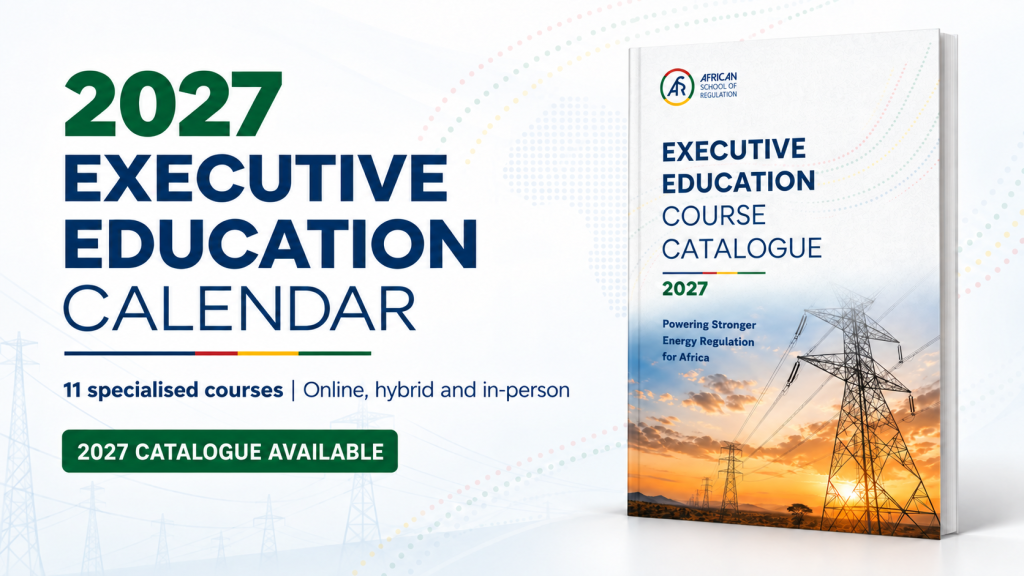
Accra, Ghana, 18 September 2026 — The African School of Regulation (ASR) has launched its 2027 Executive Education Calendar, presenting 11 specialised programmes designed to strengthen regulatory capacity and support the development of effective, sustainable and investment-ready energy systems across Africa.
Delivered online and across Accra, Kampala, Marrakech, Harare and Abidjan, the programmes will address key areas of energy regulation, including electricity tariffs, wholesale electricity markets, natural gas, power purchase agreements, energy efficiency, clean cooking, electrification and consumer protection.
The courses are intended for professionals from regulatory authorities, government ministries, utilities and other energy-sector institutions. They are also open to development finance institutions, independent power producers, academic institutions, think tanks and private-sector organisations.
“Effective regulation is central to expanding energy access, improving sector performance and mobilising sustainable investment,” said Dr. Abdulkadir Shettima, Executive Director of the African School of Regulation. “Our 2027 programme is designed to equip professionals with the knowledge, practical tools and networks required to respond to the regulatory challenges facing Africa’s energy sector.”
2027 Executive Education Calendar
| Course | Location | Price (USD) |
|---|---|---|
| Power Systems and Energy Regulation: A Practical Course for Non-Engineers15 – 26 February 2027English | LocationEn ligne | Price (USD)$200 |
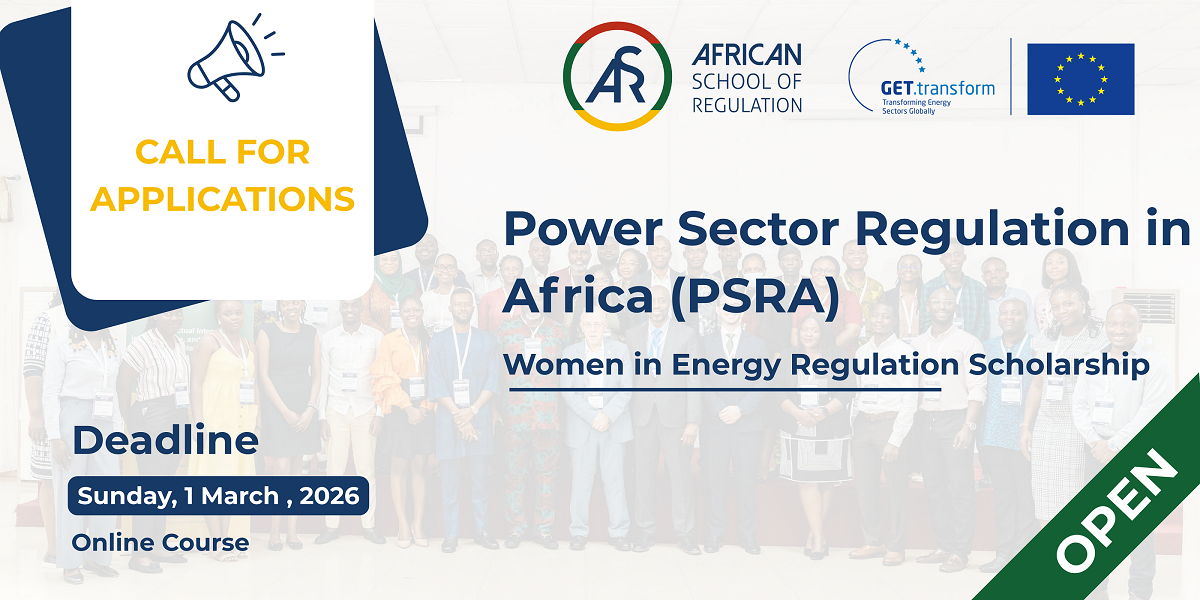
| Power Sector Regulation in Africa (PSRA)22 March – 18 June 2027English (key materials in French) | LocationEn ligne | Price (USD)$1,450 |
| Natural Gas Markets & Regulatory Frameworks12 – 23 April 2027Hybrid · English & French | LocationMarrakech, Morocco | Price (USD)$1,850 |
| Accelerating Universal Access to Clean Cooking: Policy, Regulation & Market Innovation10 May – 4 June 2027English | LocationEn ligne | Price (USD)$200 |
| Power Sector Regulation in Africa (PSRA)21 – 25 June 2027In-person · English (key materials in French) | LocationAccra, Ghana | Price (USD)$1,350 |
| Energy Efficiency: Policy, Regulation and Practice28 June – 23 July 2027English | LocationEn ligne | Price (USD)$200 |
| Electricity Tariff Design: Principles, Methodologies & Regulation19 – 30 July 2027Hybrid · English & French | LocationKampala, Uganda | Price (USD)$1,850 |
| Power Purchase Agreements: Structure, Risk, and Regulation13 – 24 September 2027Hybrid · English | LocationMarrakech, Morocco | Price (USD)$1,850 |
| Wholesale electricity markets in African countries: From national, regional and continental perspectives11 – 22 October 2027Hybrid · English & French | LocationHarare, Zimbabwe | Price (USD)$1,850 |
| Integrated Framework for Electrification (IFE): Sustainable and Scalable Electrification Models8 – 19 November 2027Hybrid · English | LocationAccra, Ghana | Price (USD)$1,850 |
| Consumer Protection, Dispute Resolution & Legal Frameworks in Power Sector Regulation29 November – 3 December 2027In-person · English & French | LocationAbidjan, Cote d'Ivoire | Price (USD)$1,850 |
All prices are in USD. Course dates are indicative and may be adjusted; any changes will be communicated promptly.
Practical learning for Africa’s energy institutions
The 2027 calendar responds to the increasingly complex decisions facing Africa’s energy institutions, including how to establish fair and cost-reflective tariffs, improve utility financial sustainability, attract responsible private investment, expand energy access and support the development of national and regional electricity markets.
The programme combines regulatory theory with practical application, comparative experience and case studies grounded in African energy systems. Participants will engage with experienced faculty and practitioners, examine real regulatory challenges and exchange knowledge with professionals from across the continent.
The calendar includes ASR’s flagship Réglementation du secteur de l'électricité en Afrique programme, delivered through both online and in-person formats. It also introduces focused learning opportunities for non-engineering professionals seeking to understand the technical foundations of power systems and their implications for regulation and policy.
Other programmes will examine the regulation of natural gas markets, the design and management of power purchase agreements, energy-efficiency policy, clean cooking, integrated electrification planning, consumer protection and dispute resolution.
Several courses will be delivered in English and French to support wider participation from across Africa.
Strengthened through collaboration
ASR’s executive education programmes draw on its network of African and international academic, regulatory and development partners. These collaborations bring together knowledge of African energy systems, international experience and practical regulatory expertise.
Selected programmes, including Réglementation du secteur de l'électricité en Afrique and Marchés de gros de l'électricité dans les pays africains, incorporate a wholesale electricity market simulation developed with Stanford University. Through the simulation, participants experience how market participants bid, dispatch and settle transactions within a competitive electricity market.
ASR’s wider academic and institutional network includes the European University Institute through the Florence School of Regulation, the University of Cape Town, the Pan African University and regional academic institutions in Ghana, Kenya, Morocco, Nigeria and Uganda.
Through these collaborations, ASR continues to connect global knowledge with the institutional and market realities of Africa’s energy sector.
Tailor-made and institutional training
In addition to the scheduled courses, ASR works with regulators, ministries, utilities, development partners and other institutions to design tailor-made training programmes.
These programmes can be adapted to specific national, regional or institutional priorities and delivered online, in Accra or at a partner institution’s preferred location. Organisations may also nominate groups of participants for courses included in the 2027 calendar.
Applications and further information
Registration is now open for selected programmes and will open progressively for the remaining courses.
The full ASR 2027 Executive Education Course Catalogue provides details on course content, dates, delivery formats, locations, fees and registration periods.
For programme enquiries, group nominations or tailor-made training partnerships, contact support@africanschoolregulation.org.