

Accra, 22 September 2026
Physical connections between national electricity grids are creating opportunities for West African countries to share power. Making those connections work as a reliable regional market will require stronger institutions, coordinated planning and credible commercial arrangements, the African School of Regulation (ASR) told a stakeholder workshop in Accra.
Speaking at the workshop as a guest speaker, Ing. Nutifafa Fiasogbor, ASR’s Head of Training, examined what Ghana could gain from deeper participation in the West African Power Pool (WAPP). The event was convened by the Brew-Hammond Energy Centre at the Kwame Nkrumah University of Science and Technology (KNUST) to discuss research undertaken with University College London, with support from the UK Government’s Climate Compatible Growth initiative.
Ing. Nutifafa said regional integration could give Ghana access to a wider range of electricity resources, improve the sharing of reserves and strengthen the resilience of its power system. It could also help countries make better use of generation and transmission investments, including as more renewable energy comes onto their grids.
But building an interconnector does not, by itself, establish a functioning electricity market. “The wires create opportunity; the rules determine whether that opportunity can actually be used,” he said. Market rules, transmission pricing, payment security and coordination between system operators and regulators all affect whether electricity can be traded predictably across borders.
His address set out five priorities: bringing national and regional power planning closer together; investing in domestic and cross-border transmission; developing market arrangements alongside the physical grid; strengthening the financial credibility of electricity transactions; and building the capacity of the institutions and people responsible for regional trade.
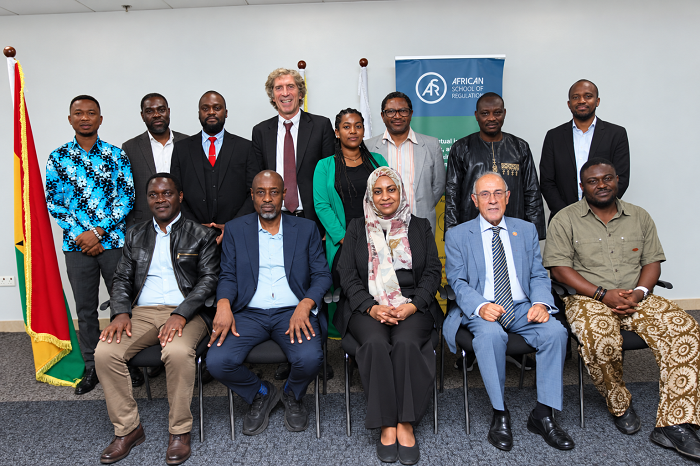
The workshop brought together stakeholders to consider the research findings and their implications for Ghana’s participation in WAPP. For ASR, the discussion reinforced the role of regulatory capacity in ensuring that regional integration delivers practical benefits for households, businesses and national economies.